Super Spin Complaints and Reputation Signals
 Available in GB
Complaints and reputation context
Current third-party complaint records for Super Spin include both resolved and unresolved cases, including UK-labelled reports about withdrawal delays and account closure. Those records are useful reputation signals, but the allegations in a player submission are not the same thing as a regulator finding or proof of a site-wide practice.
The strongest way to read the complaints is to separate three layers: what a player alleged, how the complaint platform classified the case, and what can be checked independently. For withdrawals, Super Spin’s own Terms publish a £40 minimum, £1,500 per-transaction and daily limits, £4,000 weekly and £12,000 monthly. For licence context, no UKGC licence has been verified for Super Spin or Comentive LTD.
Table of Contents
- What the current complaint database actually shows
- UK-labelled withdrawal cases include both unresolved and resolved outcomes
- Account-closure complaints are a separate theme from cashout disputes
- Official withdrawal limits help test parts of a complaint without proving the whole story
- Complaint volume needs context before it becomes a reputation judgment
- Licence context changes where a Great Britain reader can look for protection
- A practical way to document a disputed withdrawal or closure request
- Use complaint records to identify questions, not to replace primary terms
- How to read Super Spin complaint reports alongside its verified terms
What the current complaint database actually shows
Casino Guru’s current Super Spin review lists 21 complaints in its broader complaint history, broken into opened, unresolved, resolved and rejected statuses. The same page highlights complaint themes that include delayed withdrawals and account-closure requests. That is evidence that these topics recur in the database, but the platform’s totals, ratings and methodology remain Casino Guru’s own assessment rather than an official finding.
| Evidence layer | What it can establish | What it cannot establish alone |
|---|---|---|
| Player statement | What that player says happened in their case | That the allegation is proven or typical of all accounts |
| Complaint status | How the third-party complaints team closed or currently classifies the case | A regulator judgment or court finding |
| Official Super Spin Terms | Published withdrawal limits and stated KYC/cashout rules | What happened in a particular disputed transaction |
| UKGC public register | Whether a Great Britain licence is verified | The merits of an individual complaint against an unverified licensee |
UK-labelled withdrawal cases include both unresolved and resolved outcomes
One Casino Guru case submitted in March 2026 concerns a UK player who reported three £1,500 withdrawals and alleged that the casino stopped responding. Casino Guru’s case page says its complaints team attempted to contact the casino and ultimately marked the complaint unresolved after receiving no response. The player’s stronger accusation that funds were being deliberately withheld remains an allegation rather than an established fact.
A separate UK-labelled case submitted in April 2026 involved a player who reported a delayed payment and KYC requests. Casino Guru later marked that complaint resolved after the player confirmed the outcome. The existence of a resolved case matters because a reputation page should not collapse every complaint into the same bucket.
Another UK-labelled withdrawal complaint from January 2026 was marked unresolved after the platform reported a lack of cooperation. Taken together, these cases show that withdrawal delays are a recurring topic in the database, while case outcomes vary.
Complaint records: unresolved UK withdrawal case, resolved UK payment case and another unresolved UK withdrawal case.
Account-closure complaints are a separate theme from cashout disputes
Casino Guru also lists complaints about account closure and self-exclusion requests. A UK-labelled case submitted in August 2026 states that a player wanted a permanent closure after an earlier self-exclusion and disputed the information requested by the operator. The complaint record listed the case as open and waiting for the player to reply.
That open status is important. It means there was not yet a final complaint-platform outcome to report. The allegation should therefore stay framed as the player’s account of events rather than as a concluded breach. Other account-closure cases on the database have been resolved or marked unresolved, reinforcing the need to quote the case status instead of using one blanket label.
This source-literacy approach is especially important for responsible-gambling allegations, where the consequences of overstating a third-party complaint can be serious. A complaint can justify closer reading and documentation; it cannot by itself establish systematic misconduct.
Official withdrawal limits help test parts of a complaint without proving the whole story
Super Spin’s current Terms publish a £40 minimum withdrawal, a £1,500 maximum per transaction, a £1,500 daily limit, a £4,000 weekly limit and a £12,000 monthly limit. Those figures are independent facts that can be compared with the amounts mentioned in complaint records.
For example, the unresolved UK case involving three £1,500 withdrawals uses amounts that correspond to the published per-transaction ceiling. That cross-check makes the numeric detail plausible within the Terms, but it does not prove the alleged reason for the delay, the timing of internal reviews or the player’s broader interpretation of the operator’s conduct.
The Terms also allow identity verification before payout and do not provide one guaranteed processing time for every withdrawal method. They say external receipt timing depends on payment systems, and that when verification is needed processing timing is calculated from completion of requested document checks. This does not explain any individual complaint automatically; it simply defines the written cashout framework against which a complaint can be read.
For the full rule set, see the withdrawal limits.
Official source: Super Spin Terms and Conditions.
Complaint volume needs context before it becomes a reputation judgment
A raw count is incomplete without knowing how many customers use a casino, over what period the complaints accumulated, which cases were rejected for evidentiary or procedural reasons, and whether the operator participated in the third-party process. Public complaint sites rarely provide a reliable denominator for total active players, so a simple “complaints per customer” rate cannot be calculated here.
Status also matters. “Resolved” generally means the complaints platform considers the specific case settled; “unresolved” records a failure to reach a satisfactory resolution within that platform’s process; “rejected” can cover complaints the platform did not accept or could not support under its rules. None of those labels is equivalent to a UK regulator enforcement decision.
Useful signal, limited authority
Complaint databases are strongest as pattern-finding tools. Repeated themes can tell a reader what to document carefully – for example withdrawal timestamps, verification requests and account-closure correspondence – while official terms and regulator records answer different questions.
Licence context changes where a Great Britain reader can look for protection
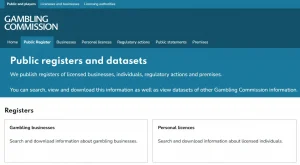
No UK Gambling Commission licence has been verified for Super Spin or Comentive LTD. The Gambling Commission states that remote casino operators providing gambling facilities to consumers in Great Britain need its licence regardless of where they are based.
Complaint allegations are not regulatory findings and do not establish a legal verdict about Super Spin. It does mean a reader should not assume that UKGC licence-holder protections, GAMSTOP participation or UKGC-linked dispute arrangements apply to the brand. The licence and protections page explains this jurisdiction split, including the separate Northern Ireland framework and the independently reported Anjouan licence.
A practical way to document a disputed withdrawal or closure request
- Save the original withdrawal request amount, date, status and any later status changes.
- Keep copies of KYC requests and the dates documents were submitted or approved.
- For closure or self-exclusion requests, retain the original message and any acknowledgement.
- Compare cashout amounts with the published £1,500 daily, £4,000 weekly and £12,000 monthly standard limits.
- Separate what support told you from what the written Terms say.
- If using a third-party complaint service, record its final status and any operator response instead of relying only on the initial player post.
These steps do not guarantee a particular outcome, but they create a clearer record than a general review score. The Super Spin review provides the wider feature and eligibility context.
Use complaint records to identify questions, not to replace primary terms
A complaint is most useful when it points to a question that can be checked elsewhere. A withdrawal-delay report can be compared with the published cashout limits and verification clauses; an account-closure report can be read alongside the account terms and the correspondence described in the case. This does not prove or disprove every allegation, but it separates the parts that are independently checkable from the parts that remain a dispute between the player and operator.
Case status is equally important. Resolved, unresolved and open records describe different outcomes within the complaint platform’s process, so they should not be compressed into a single negative count. Looking at the allegation, the platform status and the primary terms as three separate layers gives a UK reader a clearer reputation signal than a raw complaint total or a review score.
The same method helps with recurring themes. If several cases mention withdrawals, the repetition is a reason to pay close attention to cashout documentation and current terms. It is not, by itself, evidence that every withdrawal will be delayed or that a site-wide practice has been established.
How to read Super Spin complaint reports alongside its verified terms
The current complaint record contains meaningful warning signals for due diligence: UK-labelled withdrawal cases include unresolved outcomes, a separate UK payment case was resolved, and account-closure allegations also appear in the database. The correct conclusion is not that every allegation has been proved or that all players will experience the same thing.
Read each case on three levels. First, identify the allegation. Second, note the third-party case status. Third, compare whatever can be checked against primary material such as Super Spin’s published withdrawal limits and the UKGC register. That method preserves the value of complaint evidence without converting reviews into regulator findings, blacklists into facts, or individual disputes into unsupported claims of systematic misconduct.
Recommend
Super Spin Licence, UKGC Status and Player Protections
Super Spin UK Guide Licence status and UK protections No UK Gambling Commission licence has...
Super Spin Registration, Login and Account Setup
Super Spin UK Guide Registration, login and account lifecycle Super Spin's current Terms say a...

Super Spin Bonuses and UK Eligibility
Super Spin UK Guide Bonus terms and UK eligibility Super Spin's promotions page currently displays...

Super Spin Games and Software Providers
Super Spin UK Guide Slots, tables and live dealer catalogue Super Spin currently shows a...
Super Spin Payment Methods in GBP
Super Spin UK Guide GBP deposits and payment routes Super Spin publishes cards, bank transfer...

Super Spin Mobile App and PWA
Super Spin UK Guide iPhone, Android and home-screen access Super Spin's documented mobile flow is...